Pricing & info pack · 2026-11
Put the aircraft up, not a person.
If high-access work at your business still means scaffold, EWP hire or a rope crew, this pack is for you. It's written for commercial cleaners, building-wash firms, roof treatment contractors and rope access operators who want to put the aircraft up instead of a person, starting with the DCI 10L (VIP Wash Drone 104): a Part 101 aircraft at $39,995 + GST all-in, with a day of hands-on training and 90 days of Operator Support. It comes from Michael Friis, founder of Auckland commercial drone business Drone Group and exclusive NZ distributor of the DCI range.
Drones are reshaping risky, hard-to-reach work
Across the world, drones are taking over the jobs that used to mean putting a person at height or in a hazardous spot: inspecting bridges, towers, wind turbines and power lines; spraying crops; cleaning façades, roofs and solar arrays. The global commercial drone market was worth about US$24 billion in 2025 and is forecast to more than double to US$52 billion by 2033, with inspection and maintenance among the main commercial uses (Grand View Research, June 2026). The reason is simple. Someone still has to get up to the roof, the façade or the array — but now it's the aircraft that goes up, while the person stays on the ground.
For exterior cleaning and maintenance, that shift brings three things at once:
Less human risk
WorkSafe calls working at height a leading cause of serious injury and death in New Zealand, and its own working-at-height guidance gives “use technology, such as a drone, controlled from ground level” as the example of eliminating the risk — the top of the hierarchy of controls, above scaffold, edge protection and harnesses. A drone keeps your crew on the ground for most of the job, and gives you a safety story that building owners and FMs look for when they decide a tender.
More done per day
No scaffold build, no boom repositioning, no rope rigging between drops. The aircraft moves to the next section in seconds, so more of the day is spent cleaning.
A record of the site
The onboard camera turns every flight into a site record. Fly the building before you quote and see the condition of the roof, cladding or array without a ladder. Capture before-and-after footage on the job as proof of what was done. On the Clean Elite Pro 40LTR, the thermal camera also surveys solar arrays for hot spots. That record backs your quote, your invoice and your health and safety file.
The same shift is happening in New Zealand. Facility services firms that bring drone capability in-house now set the standard their competitors will be measured against.
Sources: Grand View Research, Commercial Drone Market 2026–2033; WorkSafe New Zealand, Working at height in New Zealand (Table 2, hierarchy of control measures).
Why add a drone to your business
Traditional high access
- Access
- Scaffold, EWP or boom hire, abseil crews
- Work at height
- Crew on the roof or façade
- Set-up
- Hire bookings, edge protection, exclusion zones
- Roof treatment
- Walking fragile or steep roofs
- Jobs you can quote
- Limited by access gear and crew
With a DCI wash drone
- Access
- Aircraft flown from the ground
- Work at height
- Crew stays on the ground
- Set-up
- Ground rig, launch area, exclusion zone
- Roof treatment
- Sprayed from the onboard tank
- Jobs you can quote
- Façade wash, roof treatment and solar from one aircraft
Keep the work in-house. If you currently sub out high-access washing or turn it down, a drone lets your existing team quote and deliver it.
One aircraft, three jobs. Every DCI aircraft ships with a stainless forward-facing façade lance, a downward-facing solar lance, and centrifugal spray nozzles built in for roof treatment.
What a drone is worth to your business depends on your jobs, rates and crews. Compare it against what you spend now on access hire and rope crews for this work.
See it working
Footage of the DCI aircraft washing cladding on a large retail building, soft-washing a tiled roof and cleaning a ground-mounted solar farm. The footage is from DCI Drones International in Australia. The aircraft are the same ones we supply in New Zealand.
Footage and photos: DCI Drones International, Australia. The same aircraft are supplied in New Zealand. All videos and photos.
What a drone job looks like
Step 1
Set up
Park the ground rig (water, chemical, pump), mark out the launch area and exclusion zone, run the pre-flight checks. One operator and one ground hand.
Step 2
Fly
The operator takes the aircraft up the façade or across the roof. For washing it's fed from the ground rig by hose; for roof treatment it sprays from its onboard tank. The ground hand manages water, chemical and the line.
Step 3
Swap and refill
Batteries swap at roughly 15 minutes under full load. The tank refills between treatment runs.
Step 4
Pack down
Fold the aircraft (the 10L folds to a 680 mm cube), flush the lines, log the flight. Nobody has been off the ground.
Compare it against your own numbers
Fill in what high access costs you now and set it against the price of the aircraft. Your figures stay in your browser; nothing you type here is sent to us.
Your annual high-access spend
$0
From the figures you typed. Nothing is stored unless you send it.
DCI 10L, once
$39,995 + GST
plus consumables, the Part 101 course for your pilot, and a day of training that's included. Your numbers will tell you whether it stacks up.
Work you didn't get to
Start here: the DCI 10L (VIP Wash Drone 104)
The 10L is the easiest way into drone cleaning. At just under 25 kg it sits in CAA's Part 101 class, so on jobs that meet the Part 101 rules you can fly it without the Part 102 operator certificate our larger aircraft need. Some jobs can't meet those rules, such as façades where the public, a road or neighbouring property is below the aircraft, and need Part 102 whatever the aircraft. Your pilot completes a short CAA competency assessment first (see Training and support), and your business stays responsible for its own compliance.
Why it suits a first drone
Wash, spray and treat from day one. It carries a tethered lance fed from a ground rig at up to 5,000 psi, switches to spraying roof treatment from its 10 L tank, and arrives with the façade lance, the solar lance and built-in centrifugal spray nozzles to quote all three job types.
Airworthiness inspected. Every aircraft we sell in NZ is inspected by a CAA-authorised inspector before handover.
Good first jobs for the 10L
- —Façade and window-line washing on low- to mid-rise commercial buildings, where the site meets the Part 101 rules
- —Moss, mould and lichen treatment on commercial and industrial roofs
- —Rooftop solar array cleaning
What you get, and what it costs
DCI 10L (VIP Wash Drone 104) · all-in
$39,995 + GST
One price covers the aircraft, the gear to do all three job types, training at handover and Operator Support for your first 90 days. NZ freight is included.
- Aircraft
- VIP Wash Drone 104, airworthiness inspected by a CAA-authorised inspector before handover
- Power
- Two flight batteries and a charger
- Spray setups
- Stainless forward-facing façade lance, downward-facing solar lance, and built-in centrifugal spray nozzles for roof treatment
- Training
- One day of hands-on training for up to three of your staff, on the day we hand over your drone, at our Auckland base or your premises (our travel is included)
- Field SOPs
- Drone Group's operating procedures and chemical guidance for façade washing, roof treatment and solar cleaning, delivered as a web app on your phone and kept up to date
- Operator Support (standard)
- 90 days of remote support by phone and email to get you up and running, ending in a joint review call
- Warranty
- 12 months; flight batteries 6 months (excludes wear and tear and misuse)
- Freight
- Delivered anywhere in NZ
Optional: Operator Support Plus
For operators who want us behind them after the first 90 days: an annual service and ongoing member benefits.
$195 + GST per month, 12-month minimum
- Hard shipping case with foam liner
- Annual service with a five-working-day turnaround (you ship it in, we service it and send it back)
- 20% off parts
- Member discount on Chemitech chemicals
- SOP updates when rules or products change
- Remote troubleshooting for aircraft faults
- First offer on regional jobs through Drone Group, at our discretion (not a promise of work; a referral fee may apply)
Finance. Finance options are available on all DCI aircraft. Ask us for a quote.
Room to grow: the full NZ range
Most businesses start on the 10L and step up once drone work is a regular part of their week. All three aircraft ship with the same three spray setups and are airworthiness inspected before handover.
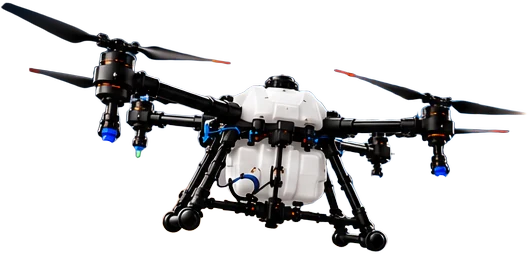
DCI 10L (VIP Wash Drone 104)
10 L · Part 101
First drone; façade wash, roof treatment, solar
$39,995 + GST
Spec sheet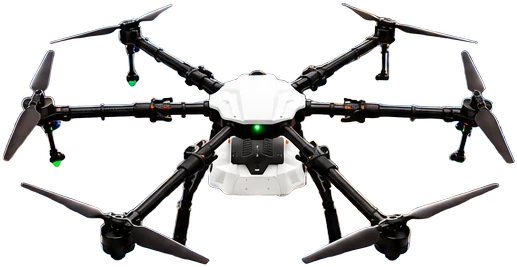
DCI 16L (VIP Wash Drone 166)
16 L · Part 102 (40 kg MTOW)
Larger roofs and more spraying per flight
$44,995 + GST
Spec sheet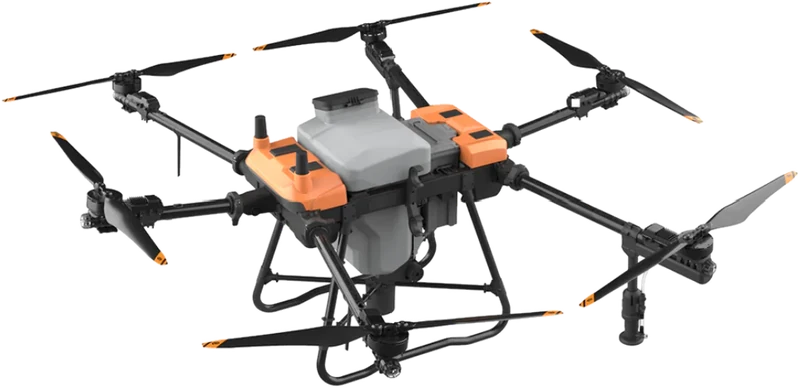
Clean Elite Pro 40LTR
40 L · Part 102 (99 kg MTOW)
Large industrial and logistics roofs
$59,995 + GST
Spec sheetThe 16L and 40L weigh more than 25 kg, so they fall under CAA Part 102. Flying them requires a Part 102 operator certificate, which the operator holds and is responsible for.
Both larger aircraft are priced the same way as the 10L: all-in, with the same inclusions, handover training, Operator Support and NZ freight.
Training and support
You get one full day of training when we hand over your drone, then 90 days of remote Operator Support from the Drone Group team.
Handover training day
- Morning: Part 101 operating rules, site safety and exclusion zones, and chemical handling
- Afternoon: hands-on flying with your aircraft, wash and spray setups, and a practical assessment
Field SOPs. You get Drone Group's operating procedures for façade washing, roof treatment and solar cleaning — Drone Group's own working method, written for these aircraft. They ship as a web app, so your operators open the current procedure on their phone at the job, and every update reaches you automatically. No printouts or stale PDFs.
Operator Support. Support is remote, by phone and email; we don't provide on-site job support. Operator Support Plus is there if you want ongoing service and support after the first 90 days.
DCI Drones NZ
Field SOPs
Roof treatment updated. See what changed before your next job.
Façade washing
Wash lance, ground rig, glazing
Roof treatment
Centrifugal nozzles, biocide, moss and lichen
Solar cleaning
Solar lance, rooftop and ground arrays
Pre-flight and site set-up
Every job, before take-off
Chemical handling
Mixing, loading, storage, spills
Field SOPs
Roof treatment
- Confirm the job and the roof type
- Set the launch area and exclusion zone
- 3Check wind and the rain windowWind within the SOP limit, and dry long enough for the product to set.
- 4Mix and load to the product label
- 5Pre-flight checks
- 6Spray runs, overlap and edges
- 7Rinse lines and pack down
- 8Log the flight and photos
Illustrative screens. The app's layout may differ, and the full procedures are shared with buyers only.
Getting Part 101-ready
Because the 10L weighs over 15 kg, CAA requires each pilot to pass a competency assessment before flying it commercially: an online Part 101 course of roughly $700, including a 60-minute practical flight test with a CAA-qualified instructor. You arrange it directly with a training provider; we can point you to one. Our handover training does not replace it.
Is it right for you?
A DCI 10L is a strong fit if most of these sound like your business:
- You already wash buildings, treat roofs or clean solar on commercial sites
- High-access jobs currently mean scaffold, EWP hire or rope crews
- You have a reliable team member who wants to become your drone operator
- Your first jobs can be flown under the Part 101 rules, so you don't need a Part 102 certificate yet
Who flies it?
You don't need to hire a pilot. The people who take to this are often the ones already running your water-blasting gear: steady, methodical, happy with a controller in their hands. The path for that person is short:
- —Part 101 theory course and flight assessment, roughly $700 and about a day
- —A full day of hands-on training on your own aircraft at handover
- —The SOPs on their phone, and 90 days of Operator Support behind them
One trained operator and a ground hand is enough to run your first jobs.
Common questions
About DCI Drones and Drone Group
DCI Drones New Zealand is the exclusive NZ distributor of the DCI range of commercial cleaning drones, made by DCI Drones International in Australia, and is run by Drone Group NZ Limited in Auckland.
The aircraft. DCI builds purpose-made cleaning and spraying drones: the VIP Wash Drone 104 and 166, and the Clean Elite Pro 40LTR. They are designed around high-pressure washing and spraying from the start, not adapted from camera drones.
The method. The SOPs, chemical guidance and support that come with every aircraft are Drone Group's documented method for commercial façade, roof and solar work, written for these aircraft and updated as rules, products and methods change.
Local support. All DCI sales and enquiries in New Zealand come through us, so you deal with one NZ team for the aircraft, airworthiness inspection, commissioning, training, support, service and parts, all from one team based in Auckland.
Next steps
Book time with Michael
Fifteen minutes on your work type, your team and your timing. Bring a site you have in mind and you'll get a straight answer on whether a 10L suits it, and which aircraft does if not. No pitch deck, no commitment.
Book time with MichaelGet notified of demo days
Leave your email and region. You'll be first to hear when we fly near you. No dates set yet — the list hears first.
When you're ready to go ahead: one quote covering the aircraft, Operator Support Plus if you want it, and finance. Then we deliver your inspected aircraft and train your operator on the day.
Michael Friis · Founder, DCI Drones NZ · Drone Group · 09 815 0000 · michael@dronegroup.nz
Appendix: specifications
Manufacturer figures. They are approximate and vary with configuration. Full one-page spec sheets are on the spec sheets page. Spec sheets.
| VIP Wash Drone 104 (10L) | VIP Wash Drone 166 (16L) | Clean Elite Pro 40LTR | |
|---|---|---|---|
| Tank capacity | 10 L | 16 L | 40 L |
| Max take-off weight | ~24.9 kg | 40 kg | 99 kg |
| CAA operating basis | Part 101 on jobs that meet the rules; otherwise Part 102 | Part 102 | Part 102 |
| Expanded size (W × L × H) | 1848 × 1848 × 680 mm | 2430 × 2430 × 600 mm | 2145 × 2045 × 865 mm |
| Folded size | 680 × 680 × 680 mm | 1091 × 970 × 600 mm | 1138 × 682 × 865 mm |
| Flight time, no load | ~18–22 min | ~18–22 min | ~18–22 min |
| Flight time, full load | ~15 min | ~15 min | ~15 min |
| Operating pressure | 5,000 psi | 5,000 psi | 5,000 psi |
| Water flow rate | 15 L/min | 15 L/min | 15 L/min |
| Pump | High-pressure electric | High-pressure electric | High-pressure electric |
| Battery | Smart lithium, 2 supplied with charger | Smart lithium, 2 supplied with charger | Smart lithium, 2 supplied with charger |
| Price | $39,995 + GST | $44,995 + GST | $59,995 + GST |
- 104: max payload 14.9 kg, empty weight ~10 kg, 1362 mm wheelbase, 360° radar obstacle sensing, 0–45 °C operating range.
- 166: max payload 23 kg, airframe 15.65 kg, 1644 mm wheelbase, 360° radar obstacle sensing, 0–45 °C.
- 40LTR: six-rotor airframe, thermal camera as standard, 2 km flying range, 6-inch HD remote.
CAA notes: the 104 is airworthiness-inspected before handover, as Part 101 requires for drones over 15 kg, and pilots of drones over 15 kg must pass a competency assessment with a CAA-authorised person or organisation. Our training is not that assessment. In practice the assessment is an online Part 101 course of roughly $700 per pilot, including a 60-minute practical flight test with a CAA-qualified instructor, which the operator arranges and pays for directly; many pilots complete it while waiting for their aircraft. The 166 and 40LTR fly under a Part 102 operator certificate held by the operator. General information, not legal advice — check current CAA rules for each job.